Why Bluetooth Sucks
Bluetooth is often the target of our frustrations, but it's actually a technical masterpiece. Let's explore why it sometimes fails and why it's still the king of wireless connectivity.
You know the routine. You hop into your car, late for work, and you just want your favorite playlist to start playing automatically. Instead, you get silence. No music. Just that sinking feeling. You toggle Bluetooth off, on, off again. And then…, it works. Magic? No, it’s just Bluetooth being Bluetooth.
If you’ve ever felt the urge to throw your phone out the window during this process, you’re not alone. “Why Bluetooth sucks” is one of the most common Bluetooth-related searches on Google (yes, I’m using Google search as a metric in 2026), and it fuels endless Reddit threads.
We all hate it, or at least, we think we do. But here's the twist: Bluetooth is actually good. In fact, it’s one of the most robust, well-engineered pieces of technology we use every day. The real suck? Everything around it. Let's get into it.
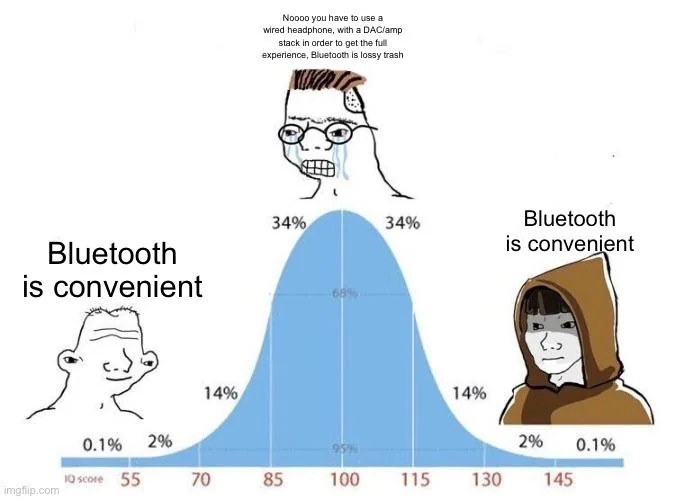
Bluetooth is convenient - Reddit.
A Brief History of Connectivity
Before Bluetooth, the "wireless" world was a fragmented mess. If you wanted to send a file between two devices, you usually had two choices: a proprietary cable that you definitely lost, or Infrared (IrDA).
I’m too young to have experienced the Infrared era, but everyone agrees it was a nightmare. You had to point two devices directly at each other, line of sight, and if a stray cat walked between them, the transfer failed. It was slow, clunky, and physically demanding.
Then, in the mid-90s, engineers at Ericsson (led by Jaap Haartsen) realized we needed a short-range radio standard. They named it after Harald "Bluetooth" Gormsson, a Viking king who united Denmark and Norway, because the goal was to unite the PC and phone industries.
Why Bluetooth Won the Wireless Race
Bluetooth didn’t just win; it dominated. Let’s break down why.
The truth is that Bluetooth hit a rare sweet spot. It was cheap, efficient, and aggressively universal. Manufacturers love it because the modules cost pennies to produce, making it a no-brainer to toss into everything from high-end medical gear to disposable IoT sensors and car keys.
This cost-effectiveness is paired with a radical approach to power consumption. Especially since the advent of Bluetooth Low Energy (BLE), devices can survive for months or even years on a single tiny coin cell battery. This is achieved through ultra-low duty cycles and asynchronous sleep cycles, where the radio stays dormant for the vast majority of the time, waking up only for a fraction of a second to handshake and exchange data before disappearing back into a power-saving state.
This efficiency is backed by an unusually high level of industry coordination. The Bluetooth SIG (a massive coalition including heavyweights like Apple, Google, and Intel) ensures the standard remains open and royalty-free. By avoiding the kind of licensing wars that often fragment new technologies, they ensured that every phone, car, and speaker on the planet speaks the same language.
But the real "secret sauce" that keeps the whole system from collapsing is how it handles the absolute chaos of the 2.4 GHz band. This is the same crowded frequency where your Wi-Fi, microwave, and baby monitor live, yet Bluetooth manages to stay out of the way through a technical masterpiece called Adaptive Frequency Hopping. It carves the band into 79 different channels and "hops" between them 1,600 times per second. If it hits interference on one frequency, it simply moves to the next one before the user even notices a stutter, maintaining a stable link in an invisible sea of digital noise.
Why not Wi-Fi? Too power-hungry for tiny gadgets. Bluetooth became the king because it was practical, evolvable (now on version 6.2), and everywhere.
Bluetooth is actually great.
Daily Frustrations: Why They Happen
So, if the tech is so good, why does your $300 pair of headphones occasionally turn into a stuttering mess?
Most "Bluetooth issues" aren't actually Bluetooth protocol issues. They usually fall into these camps:
- The "Cheap Hardware" Problem: To save money, some manufacturers use bottom-tier antennas or subpar shielding. If the radio can't 'hear' the signal over the noise from internal sources outside the radio module itself, the connection drops.
- The Software Layer: As I’ve mentioned in previous posts, Bluetooth is like a REST API. The protocol defines how data is moved, but the application (the car’s UI or the phone’s OS) has to handle that data correctly. Most "pairing" headaches are actually bugs in the software written by the car manufacturer, not the Bluetooth radio itself. This introduces the next problem, profiles.
- Profiles: Bluetooth isn’t one universal “connect and it works” mode, it’s a menu of roles and feature sets called profiles (A2DP for stereo audio, HFP for calls, AVRCP for media controls, HID for keyboards, plus a whole universe of BLE services). Your devices have to implement the right profiles, do so correctly, and then negotiate which ones to use at a specific point in time. When that negotiation is sloppy (or a vendor cuts corners) you get the classic experience: connected, but missing controls, no microphone, weird latency, or “audio is fine but calls are broken.”. And don’t even get me started on changing them on the fly, or on manufacturers that don’t want to handle them properly and instead implement their own protocols**.**
- Physics: That 2.4GHz band? Shared with Wi-Fi, microwaves, baby monitors. Your router blasting Netflix floods the airwaves. Bluetooth hops frequencies 1,600 times/sec to fight back, but crowded spots (apartments, offices) amplify drops.
- Power-Saving Shenanigans: BLE sleeps to save power, advertising sparingly. Your phone also scans intermittently to optimize battery life, and if configured incorrectly, it “wakes up late”, feels laggy, but remains efficient.
- Too many vendors, too many interpretations: Bluetooth is standardized, but implementations vary. Two devices can be “Bluetooth compliant” and still have quirky interoperability because of: different chipsets, different firmware, different OS versions, different profile implementations.
So, as you can see, many of its novelties can, in certain scenarios, be its own downfall.
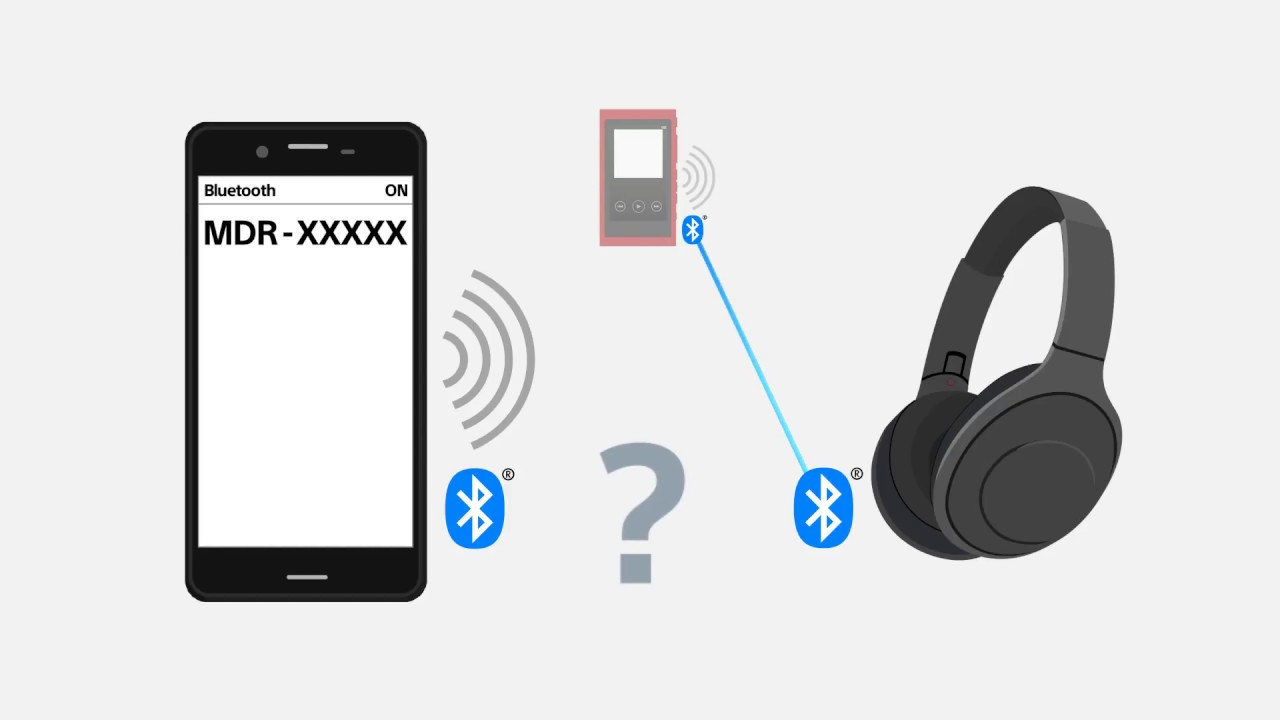
Bluetooth common problems.
Bluetooth’s True Reliability and Critical Applications
We tend to judge Bluetooth by our headphones and speakers, but this tech is also trusted in environments where "toggling it off and on" isn't an option.
Think about medical technology. Neuralink (Neuralink's brain-computer interface (BCI) relies on ...), the brain-computer interface, relies on Bluetooth Low Energy to transmit neural data from an implant to an external device. If Bluetooth were truly “unreliable,” using it for a device literally sewn into a human brain would never have crossed anyone’s mind. It’s also the backbone of industrial IoT, where thousands of sensors and beacons in factories report data in real-time, as well as the "Find My" networks that help you locate a lost AirTag across a city.
The good news? Your experience doesn’t have to be that terrible. You can tap into Bluetooth's best by doing your homework before buying: make sure it’s running the latest Bluetooth version. We're on 6.2 now, so anything older will drag your streaming down to the lowest-common-denominator codecs and features.
If you're still having trouble, especially on a PC, consider using a dedicated USB Dongle. The dongle is effectively a new Bluetooth radio + chipset + firmware stack: newer versions, better drivers, better coexistence behavior, and often a better antenna than whatever bargain module got soldered inside your computer. This is a specialized device designed to boost your Bluetooth experience.
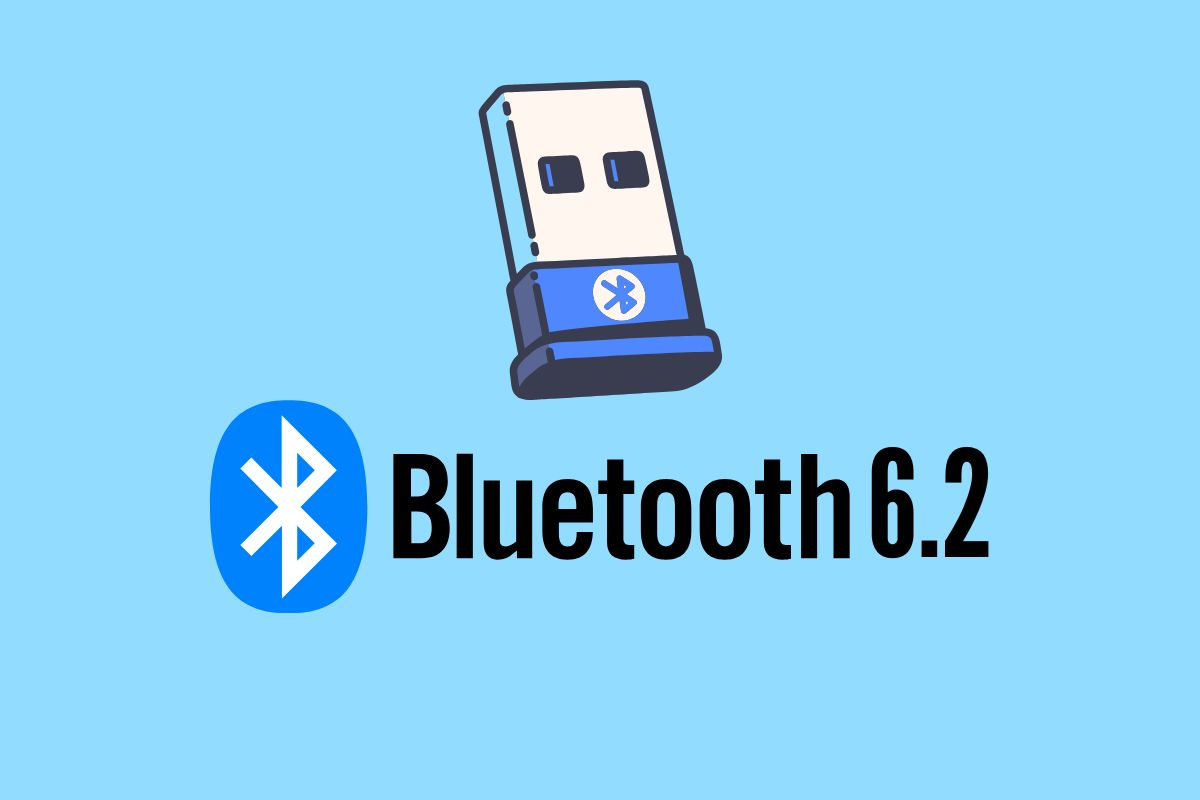
Bluetooth 6.2 Dongle.
Final Thoughts
If there's anything to remember from reading this, remember this: Bluetooth is the invisible glue of our modern world. It’s easy to complain when it fails, but rarely do we stop to marvel at the fact that it works at all, given how much we ask of it.
Next time your car refuses to play your music, don’t blame the Viking king. Bluetooth works, but making it work well across devices is hard, and that’s where good engineering matters.
If you’re a developer struggling with this, we may be able to help. Reach out.
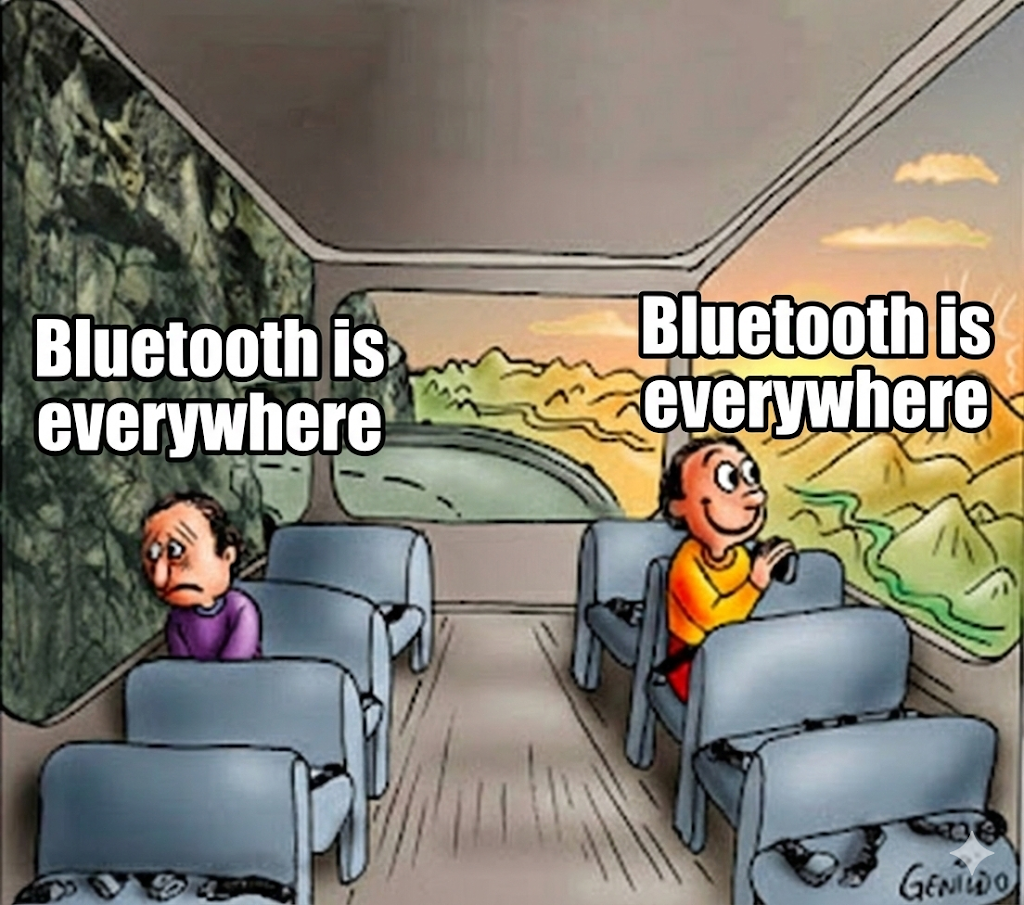
Bluetooth is everywhere.
Alejo Rojas
2026-01-31
Blog & Resources for Builders